Blidz - Shop Deals, Save Money
- 4.3
- Rating
- 1.00M
- Installs
- Free
- Price

 Analysis by App-foxy
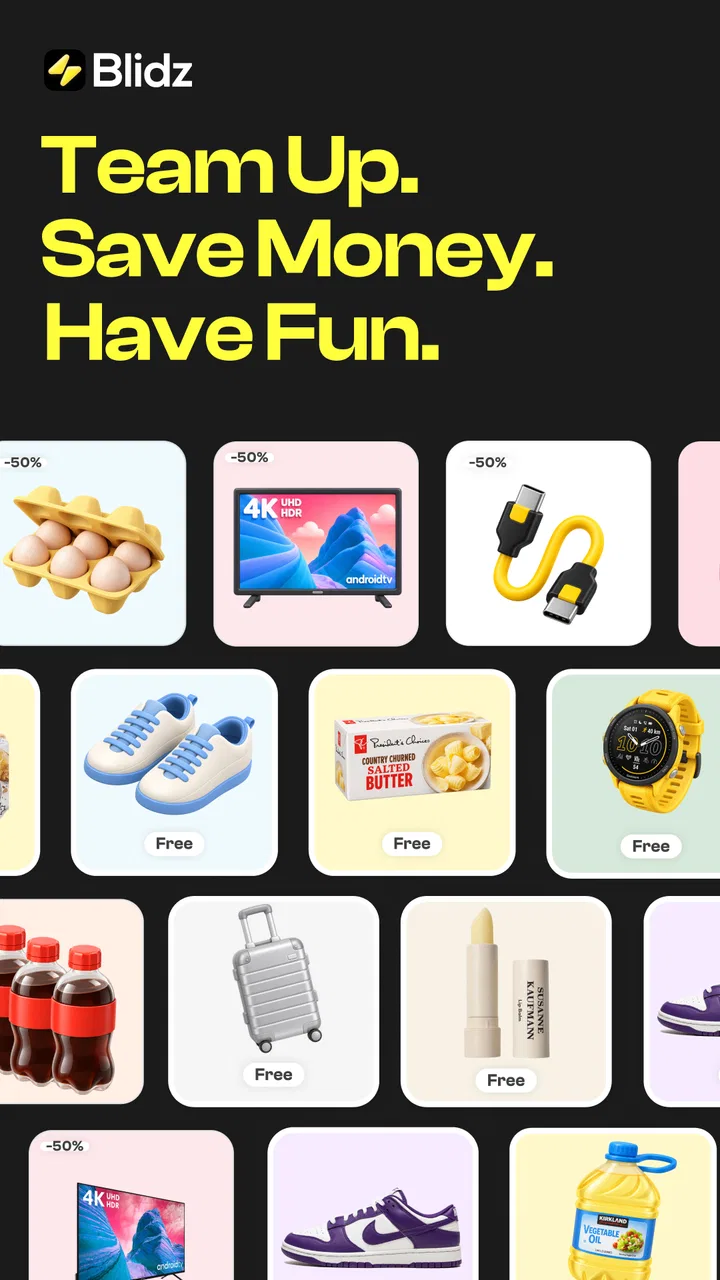
Blidz is the kind of shopping app that can feel immediately entertaining because it treats finding deals as more than a quiet search-and-checkout task. I spent time using it as a shopping app rather than judging it only by its promotional language, and my first impression was clear: the appeal comes from combining discounted products with a social, reward-focused experience. That makes browsing feel more active than opening a conventional retailer and typing in exactly what I need.
That extra energy is also the main question for long-term use. A shopping app earns a permanent place on my phone only when it helps me buy something I genuinely need, not merely when it gives me another stream of tempting offers. Blidz, developed by Blidz, is free to install, but it includes in-app purchases ranging from $12.99 to $39.99 per item. I would therefore approach it as a deal-discovery tool with entertainment elements, not as an automatic guarantee that every offer is the cheapest option available.
What makes the first week appealing
The opening experience is easy to understand. Blidz belongs to the shopping category, and its central idea is to bring products, savings deals, promotions, rewards, and social participation into one place. I found that combination more engaging than a standard product catalog because there is always a sense that browsing may lead to something unexpected. It suits people who enjoy comparing possibilities and discovering items they were not actively searching for.
You May Also Like

 Blood Strike: 2.5 Anniversary
Blood Strike’s Loadouts Turn Every Drop Into a Tactical Gamble
A close look at Blood Strike’s custom loadouts: how fast access to signature weapons reshapes its battle royale rhythm, rewards preparation, and narrows the gap between fights.

 Pandora - Music & Podcasts
Pandora’s Music Is Easy to Start, but Harder to Recover
Pandora’s strength is its low-effort path from a seed to a station. Its weak spot is how much confidence it asks you to place in connection, setup, and quiet recovery.

 8 Ball Pool
 Is Built on Rivalries, Rematches, and Routine
A close look at the rivalries, rematches, shared routines, and unanswered safety questions that turn a quick pool match into a persistent mobile community.

 Samsung Music
’s Quiet Strength Is Playing What You Already Own
Its reach comes less from spectacle than from dependable access to a personal library. That simplicity is both the app’s strongest retention engine and its ceiling.

 AccuWeather: Weather Radar
AccuWeather Review: A Quick, Clear Forecast for Everyday Decisions
For everyday plans, the best forecast is the one you can understand quickly. AccuWeather makes rain timing, radar, and local conditions easy to act on, with a few trade-offs.

 Hill Climb Racing
Why Hill Climb Racing Still Turns Crashes Into One More Run
A tiny car, a bumpy hill and one more upgrade: Hill Climb Racing keeps resurfacing because its simple chaos makes every near-miss feel personal.
More From Our News Desk



The app has been available since October 14, 2015, so it is not a brand-new experiment trying to prove that mobile shopping can work. Its current version is 6.8.53, and it supports devices running Android 7.0 or later. That broad Android compatibility is useful if you are using an older phone, although the quality of the experience will still depend on the device, connection, and how smoothly the current app behaves on your particular hardware.
What I liked during an initial session was the low commitment. Because the app is free, I could explore its shopping environment before deciding whether it deserved regular attention. That matters with a deal-oriented service: I would not want to pay simply to test whether the available offers match my interests. The free entry point makes casual discovery less risky, provided I stay aware that some purchases inside the app cost real money.
The social angle changes how I browse. On a conventional shopping site, my path is usually direct: search, filter, inspect, buy. Blidz encourages a more relaxed pattern in which I can look through promotions and consider whether a deal is worth acting on. That can be enjoyable when I have spare time, especially for inexpensive household items, gifts, accessories, or small purchases where discovery is part of the fun.
Still, I would not confuse an active browsing experience with a better buying decision. The first-week excitement can come from the format itself. A stream of promotions naturally creates urgency and curiosity, even when the product was not on my original list. My practical advice is to enter with a short shopping plan. If I know that I am looking for a particular type of item, I am less likely to turn a discount into an unnecessary expense.
How I would use it during an ordinary shopping trip
Imagine that I need a small present and do not have a specific brand in mind. I could open Blidz, browse the available deals, compare a few possibilities, and use the social or reward-oriented parts of the app as a way to narrow my attention. That is a realistic situation where the app adds value: I am open to suggestions, and the discovery process is part of the task.
For a planned purchase, I would use a different workflow. I would first write down the exact product requirements, then check Blidz for a matching offer rather than browsing without limits. After finding a candidate, I would compare the final cost and the practical details with a usual retailer or marketplace before completing the purchase. This extra step is important because a low-looking offer is not automatically the best overall choice once delivery, timing, product suitability, and return convenience enter the decision.
That is one of the app’s less obvious trade-offs. Its social-shopping design can help me discover options, but it can also make me spend more time shopping than I intended. The same quality that makes the first week lively may become a distraction when I only need one item quickly.
Who is likely to enjoy the format
I think Blidz is a good fit for people who enjoy deal hunting, browsing without a rigid list, and sharing the excitement of finding something at a lower price. It may also work well for shoppers who like promotions and rewards enough to check an app regularly rather than visiting only when a specific need appears.
It is less suitable for someone who wants a plain, predictable checkout path. If my priority is a familiar retailer, a carefully organized wishlist, or the fastest possible repeat purchase, a conventional shopping app may be more comfortable. Blidz asks me to engage with the shopping experience, and not everyone wants that extra layer.
The age rating is Mature 17+, which is another practical point to consider before recommending it to a younger user. I would also be cautious about handing the phone to a child simply because the interface may feel playful or promotional. Shopping and reward mechanics can encourage impulse decisions, so adults should remain responsible for purchases and account activity.
Whether the value survives beyond the novelty
After the first week, the important issue becomes repetition. I do not keep a shopping app installed because it was fun once; I keep it when it repeatedly helps me save time or money on purchases I would make anyway. Blidz has a reasonable chance of becoming a recurring tool for people who actively monitor deals, but its lasting value depends heavily on personal shopping habits.
The app’s public reception suggests that it has reached a substantial audience: it has more than 1 million installs, an average rating of 4.3, around 188 thousand ratings, and roughly 35 thousand reviews. Those figures show meaningful adoption and a generally positive response, but they do not remove the need for personal checking. A popular deal app can still be a poor match if its offers do not fit my normal purchases or if its browsing style encourages me to buy things I would otherwise ignore.
For month-to-month use, I would create a simple rule: open Blidz when I have a real shopping purpose, during a planned deal-checking session, or when I am looking for gift ideas. I would avoid treating every promotion as a reason to visit. This keeps the app useful without allowing it to become a daily habit built purely around scrolling.
That distinction matters because rewards and promotions can be valuable only when they support sensible purchases. A reward that persuades me to buy an unwanted item is not a saving in any meaningful sense. I judge the app more favorably when I use it to reduce the cost of something already on my list, and less favorably when the promotion becomes the reason for the purchase.
A practical routine for repeat users
My preferred routine would be short and deliberate. I would begin with a need, a budget, and a deadline. Then I would inspect relevant offers, read the product information carefully, and compare the deal with at least one familiar alternative. If the offer still makes sense, I would complete the purchase; if not, I would leave without trying to justify it simply because it appeared in a promotional feed.
I would also keep track of what kinds of products actually help me. If several visits produce useful household finds but little value for electronics or gifts, I would narrow my use rather than expecting every section to be equally worthwhile. This is a better long-term approach than assuming the app must provide savings across all shopping categories.
Another useful habit is separating discovery from decision-making. I can use Blidz to find an interesting product, then pause before paying. That pause protects me from the urgency that often accompanies promotions. It also gives me time to check whether I need the item, whether the price is genuinely attractive, and whether another seller offers a better overall purchase experience.
What requires ongoing attention
The maintenance burden is not technical so much as behavioral. I would need to keep an eye on spending, review the details of each offer, and remember that the free app includes paid in-app items. The listed purchase range is $12.99 to $39.99 per item, so the financial risk is not limited to tiny impulse buys. A few attractive promotions can quickly become a meaningful total if I stop treating each purchase as a separate decision.
I would also make sure the app remains current. Blidz has a specific current version, 6.8.53, and Android compatibility begins at version 7.0. Keeping the application updated is sensible for access to the latest available experience, while older devices may offer a less comfortable browsing session even when they meet the minimum operating-system requirement.
There is also a maintenance cost in attention. Social shopping works best when I am willing to look around, but that same structure can create a routine of checking without a clear purpose. If I notice that I am opening the app repeatedly and leaving with products I had not planned to buy, I would reduce visits or remove it. A deal service should serve my budget, not become a source of pressure.
Where fatigue can set in
The first source of fatigue is repetition. Promotions are exciting when they feel fresh, but browsing can become tiring if I repeatedly see similar types of offers or if I must sift through many products to find one genuinely useful option. This is not a reason to dismiss the app, but it does mean that its novelty may fade faster for a shopper who does not enjoy browsing as an activity.
The second is comparison effort. Blidz can surface a deal, but I still have to decide whether it is the right deal. For important purchases, I would want to compare specifications, total cost, expected delivery, and the reliability of the buying route with alternatives. If I have to perform that research every time, the app may be less convenient than a retailer I already trust, even when the displayed promotion looks appealing.
The third is the tension between social participation and privacy of attention. Some shoppers enjoy sharing discoveries and engaging with promotional mechanics; others find that unnecessary. I prefer the app when those elements help me find something useful, but I would not want them to replace clear product information or make the checkout decision feel rushed.
There is also a simple mismatch between browsing and urgent shopping. If I need a replacement item today, I usually value dependable availability and a predictable delivery path more than a playful discovery process. In that situation, a conventional marketplace or the app of a retailer I already use may be the better choice. Blidz makes more sense when I have time to explore and the purchase is flexible.
How it compares with ordinary shopping alternatives
Compared with a standard retailer app, Blidz feels more discovery-led and promotion-focused. A retailer’s application is usually strongest when I already know where I want to shop, what product I want, and how I want to reorder it. Blidz is stronger when I am open to browsing different possibilities and want the shopping process to include social or reward-oriented elements.
Compared with a large marketplace, the key difference is not simply the number of products. It is the way attention is directed. Marketplaces often prioritize search, filters, seller comparison, and repeat buying. Blidz places more emphasis on the experience of finding deals. That may be more enjoyable for casual browsing, while the marketplace approach may be more efficient for a precise purchase.
Compared with coupon or price-tracking tools, Blidz appears more like a place to shop than a background utility. A price tracker helps me wait for a target price; a coupon tool helps reduce the cost at checkout. Blidz is better suited to discovering promotions within its own shopping environment. If I already know the exact product and want the broadest possible price history, another type of tool may serve me better.
My conclusion from that comparison is not that one category is universally superior. Blidz earns its place when I want a social, deal-centered shopping session. It does not replace every other shopping tool, and I would not use it as my only source for high-consideration purchases.
My long-term verdict
Blidz earns lasting space only when I treat it as a controlled deal-discovery habit rather than an endless shopping feed. The free entry point, broad Android support from version 7.0 onward, and established user base make it easy to try. Its strongest quality is the way it turns browsing promotions into an active experience, which can be genuinely useful for flexible purchases, gifts, and shoppers who enjoy finding unexpected bargains.
My recommendation is more cautious for people who are vulnerable to impulse buying or who want a fast, no-distraction checkout. The Mature 17+ rating and the presence of in-app purchases between $12.99 and $39.99 per item reinforce the need to approach it with a budget. I would not install it expecting every promotion to beat every alternative, and I would not keep it merely because it makes scrolling entertaining.
For me, the best long-term use is occasional and intentional: make a list, browse for relevant deals, compare before paying, and leave when the shopping task is finished. Used that way, Blidz can be a worthwhile addition to a shopping routine rather than another app competing for attention. Its lasting value is real, but it comes from disciplined use and relevant purchases, not from novelty alone.
FAQs for Blidz - Shop Deals, Save Money
01What is Blidz - Shop Deals, Save Money?
Blidz is a shopping app focused on discounted products, flash deals, and interactive ways to discover lower prices. The catalog may include electronics, home goods, fashion, beauty items, accessories, and other everyday products. Before ordering, users should review the product description, seller information, ratings, shipping details, estimated delivery time, and final checkout price because availability and deal conditions can vary.
02How do deals and discounts work on Blidz?
Blidz presents products through limited-time offers, promotional pricing, and deal-based shopping features. Some discounts may depend on stock, a countdown, participation requirements, or a specific promotion. The price shown in advertisements may not always represent the complete amount you pay, so check shipping fees, taxes, applicable coupons, and any conditions displayed on the product or checkout page before confirming your purchase.
03Is Blidz safe to use for shopping and payments?
Blidz can be used to browse products, place orders, and manage purchases through its mobile shopping platform, but users should still shop carefully. Use a secure connection, choose payment methods supported by the app, and avoid sharing account details outside official channels. It is also wise to read recent reviews, confirm return policies, and save order confirmations in case customer support is needed.
04How long does shipping take, and can I track my order?
Delivery times on Blidz may differ considerably depending on the product, seller, warehouse location, destination, and shipping method selected at checkout. Some items may arrive quickly, while others can require a longer international delivery period. After ordering, check the purchase section for tracking updates and estimated dates. Remember that tracking information may take time to appear after the package is dispatched.
05What should I know about returns, refunds, and customer support?
Before buying, carefully review the return window, refund requirements, cancellation rules, and instructions for reporting damaged, incorrect, or missing items. Keep packaging, photos, receipts, and order information until the purchase is resolved. Blidz support options may be available through the app or its help center, but response times can vary, so contact support promptly when an order problem occurs.
Pros
- Gamified shopping makes browsing deals more engaging.
- Frequent discounts can help lower prices on selected products.
- Group-buying features may unlock better offers with friends.
- The app provides a broad range of product categories.
- Order tracking helps monitor purchases after checkout.
Cons
- Some deals may require inviting others or meeting group targets.
- Product quality and seller reliability can vary between listings.
- Limited-time offers may encourage rushed buying decisions.
- Shipping times can differ significantly by seller and location.
- Returns and refunds may involve more steps than standard retailers.

Blidz - Shop Deals, Save Money
Gallery